
Water heaters · How tankless works
How tankless water heaters actually work.
Tankless (demand-type or instantaneous) water heaters provide hot water only as it’s needed, without the standby energy losses of a storage tank. Here’s how they work and what to consider.
- Tankless specialists
- Properly sized systems
- Licensed NJ Plumbers #9366
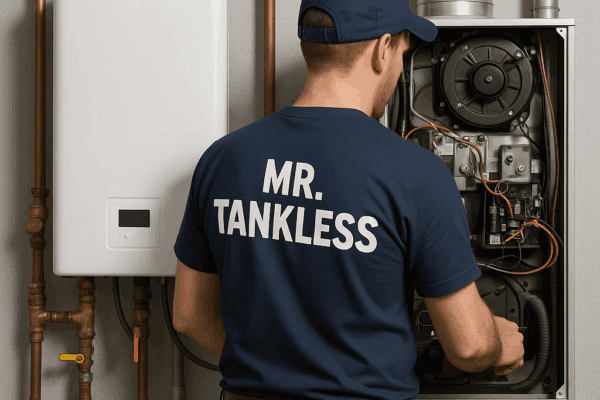
“We used Howard Ryan to convert our old steam radiators to a tankless hot water system… It’s much more efficient and the space saving benefits are great.”
How it works
Open the tap. Make the heat.
When a hot water faucet opens, cold water flows through a heat exchanger and a gas burner or electric element heats it, so you never wait for a tank to refill.
Flow starts
A sensor detects the call for hot water.
Heat transfers
The heat exchanger warms the moving water.
Demand ends
Heating stops when the tap closes.
Flow rate
Continuous hot water, within its limits.
Gas-fired models deliver higher flow rates than electric ones. Even so, simultaneous uses in a large household, like a shower and the dishwasher at once, can stretch the largest unit to its limit.
Two or more units, or dedicated units for high-demand appliances, solve that, though the extra cost isn’t always worth it. Demand heaters also suit remote bathrooms and hot tubs, and work as boosters for dishwashers, clothes washers, or solar water heating.
Advantages & tradeoffs
Tank or tankless? Weigh it up.
For homes using 41 gallons or less of hot water a day, demand heaters can be 24–34% more energy efficient than storage tanks, and 8–14% for high-use homes around 86 gallons a day. They cost more upfront, but lower operating costs and a longer life can offset the price.
Storage tank
- Standby heat loss keeps a full tank hot around the clock
- Typically lasts 10–15 years
- Must refill and reheat after heavy use
Tankless
- No standby heat loss
- Most last more than 20 years, with easily replaceable parts
- Lower operating and energy costs
- Choose intermittent ignition over a standing pilot light to avoid wasting gas
Selecting & installing
Choose carefully. Install it right.
Size, fuel type and availability, energy efficiency, and cost all matter when choosing a demand water heater. Installation depends on fuel, climate, local codes, and combustion safety, so hire a qualified plumbing and heating contractor. When you choose one:
- Get cost estimates in writing
- Ask for references
- Check the company with the Better Business Bureau
- Confirm they’ll pull any required permit and know local codes
Periodic maintenance can significantly extend your water heater’s life and minimize lost efficiency. Your owner’s manual lists specific recommendations.
Make it affordable
Upgrade now. Pay over time.
Flexible financing, utility rebates, and current promotions help make the work your home needs fit your budget.
Flexible financing
Quick approval with a soft credit check that won’t affect your score.
Explore financingUp to $750
PSE&G rebates
Qualifying energy-efficient upgrades may be eligible. We’ll help you find out.
Check rebatesCurrent promotions
10% off any service for new customers, $299 water heater maintenance, and more.
View promotionsCustomer reviews
Trusted by your neighbors.
“We used Howard Ryan to convert our old steam radiators to a tankless hot water system… It’s much more efficient and the space saving benefits are great.”
“We contacted Mr Tankless around 3 PM in the middle of a heat wave. Howard was at our house before the end of the day and we had a new AC unit in 48 hrs!”
“From the first phone call to the final installation, he was responsive, professional, and transparent about the process and prices.”
Ready when you are
Have questions? Talk to our professionals.
Talk to a real person today. You’ll get honest advice, an upfront price, and work done right the first time.